Showing posts with label paranormal equipment. Show all posts

Wednesday, July 27, 2016

Cameras VS. Monitors/TV's

I wrote this blog in order to educate some people and to keep people from falling prey to a huge money making sceem. I'll try not to get to technical as most people like to keep things simple. Most of the people in the paranormal community, whether they watch all the TV shows and think its cool to go ghost hunting, try to help people by investigating in there home and telling them yep it haunted or those that do this to try and find proof, always want the newest gadget out there. And there's nothing wrong with that, but as I have said before and will always repeat myself...RESEARCH, RESEARCH, RESEARCH.


With that said, there are a number of cameras out there that shoot in numerous resolutions. The most common are HD, 4K and 1 paranormal TV show actually claims to shoot in 6K. Now there are also a lot of HD cameras out there that are labeled 4K when they really are only HD cams with that label in order to up the price a bit. A true 4K camera will cost a bit more true. Now you can't purchase a 6K camera, if you could it would be ridiculous in price, especially since there are no 6K TV's or monitors on the market, so I won't even get into the whole "we use a special 6K full spectrum cam to film with" paranormal TV/Soap Opera/Reality show.


Now to get to my point (finally huh), No matter what resolution camera is used to shoot the footage, it will only be as high of resolution as the monitor/TV it is being watched on. Example: if your using a 4K camera to shoot footage, and the monitor it is being seen on is 1080, then it will only be 1080, not 4K. Another example: if your using an HD camera to shoot the footage, but the monitor/TV is 4K, it is still only going to be seen in 1080 because that is the resolution of the camera. And if you really believe the scenario about the 6K camera, it will only be as good as the TV you are watching the program on.


So to sum things up: cameras are being labeled as 4K just as a way for some companies to make extra cash don't get fooled. I'M NOT SAYING THERE ARE NO 4K CAMERAS OUT THERE, just use your common sense and RESEARCH, RESEARCH RESEARCH.


Thursday, February 4, 2016

Coming Soon By PIE!!! The SRRD (Self Recording Raudive Diode)


Coming next month by PIE the SRRD!!! This piece of equipment is a Raudive Diode that records without having to plug it into any recorder or other device. The way this item works: it has its own internal 8gb storage, it also has its own rechargeable battery. With a full charge it will run and record for 15 hours, it has a on/off switch, led light (to show when its recording, when it was shut off, low battery and charging). Its easy to upload the files it records to the computer via USB (that is also the way it charges). Basically you just turn it on and continue your investigation. It is small enough to either be hand held or just sit on a table when doing an EVP session. I also build a basic Raudive Diode that plugs into a recorder. If your not familiar with the Raudive Diode or have questions about how it works, email me at info@paranormalinvestigationsequipment.com, contact me from my website or message me on Facebook.

PIE's SRRD

Tuesday, October 13, 2015

Redesigned piece of old school equipment from Paranormal Investigations Equipment

Matt here from Paranormal Investigations Equipment, I have redesigned a piece of old school equipment.

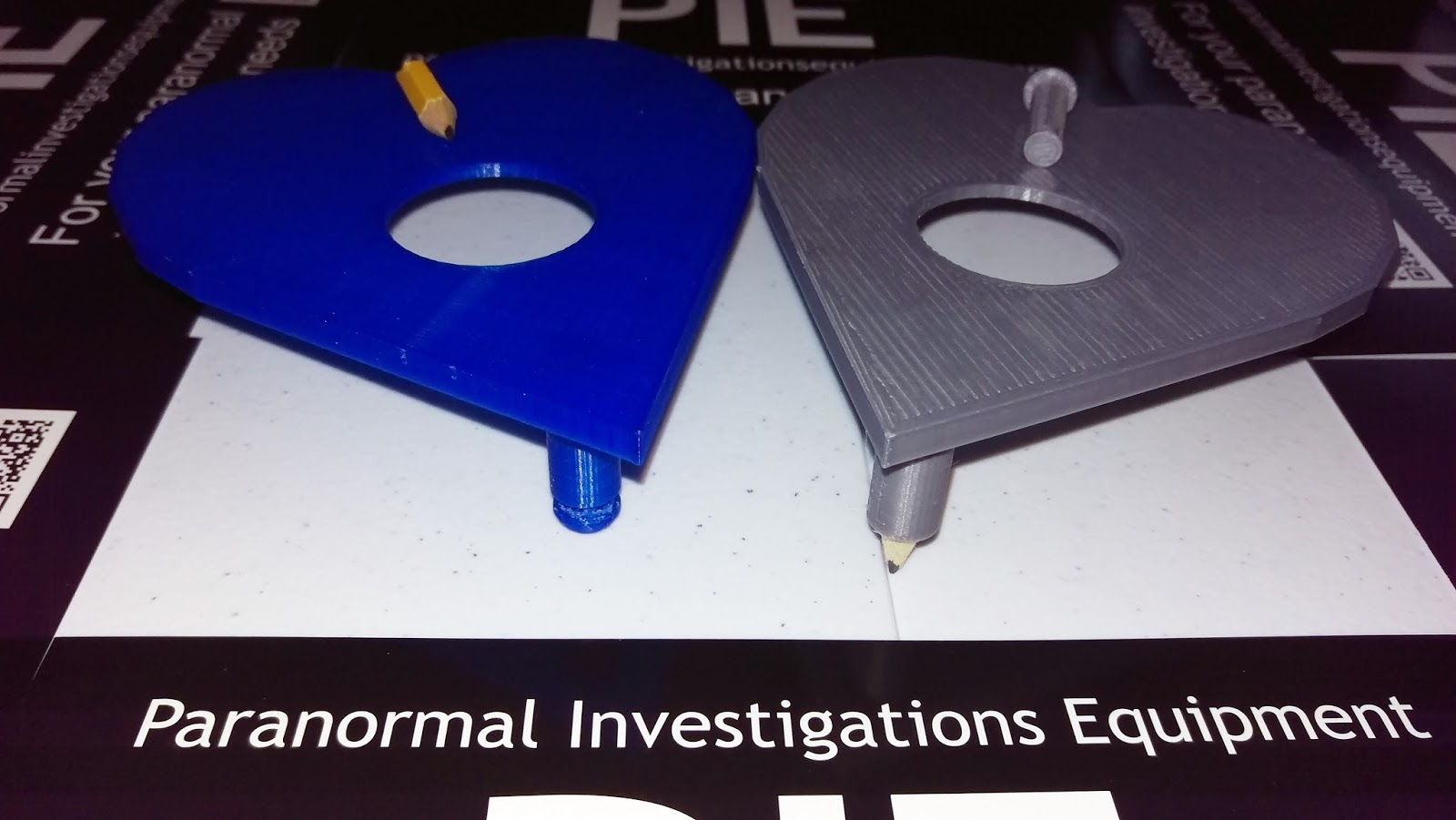
The Auto-Write Planchette

The Auto-Write Planchette has been around since the middle 1800's, but has not been widely used as an ITC tool. I am trying to change that, this device does not need a spirit board to accompany it as is the assumption of many people. Yes the planchette IS used with spirit boards, but the Auto-Write Planchette only needs a piece of paper for the spirit or entity being spoken too, to write out it's answers. I have however redesigned this Auto-Write Planchette to be used as a normal planchette as well. By removing the front leg and replacing it with a pencil this ITC device can be used for either a normal planchette or an Auto-Write Planchette. 

Thursday, September 3, 2015

INTRODUCING THE NEW CAMSOY 1080 HD FULL SPECTRUM CAMERA

The WI-FI, 1080p HD action camera modded by Paranormal Investigations Equipment to full spectrum, is the new action cam that rivals the GoPro and that is NOT in the SJCAM family. With 2 - 2.5 hours per charge, an sharper lens and more technologically advanced sensor, this camera is perfect for paranormal investigations, especially modded to full spectrum.

This light weight camera has a full 2" viewing screen, 2-2.5 hours of battery life per charge, can record while plugged also, stable software, records in Quicktime format and great non-muffled audio. All this for a fraction of the cost as the GoPro hero 3/3+ it rivals.

PIE does carry the full spectrum version as well as other full spectrum cameras in their Ebay store - http://stores.ebay.com/paranormalinvestigationsequipment


Saturday, August 8, 2015

USING A DRONE WITH A FULL SPECTRUM CAM FOR DAYTIME INVESTIGATIONS

My drone used for daytime investigations.

This is a picture of the drone outfitted with a full spectrum modded camera, I use for my daytime investigations. I recently started a Daytime Paranormal Society, and investigate cemeteries, historical property and historical buildings.

Drones would be a great tool for any investigation day or night. Outfitted with a full spectrum camera, one would get a great birds eye view of the property being investigated, get great shots of the outside of windows (instead of standing out front taking pics from a distance), if the rest of the team is investigating indoors have 1 person and the drone watching the perimeter of the building to capture any movement outside. 

There are endless ways of using it, basically it would do the job of 1 or 2 team members. I'm going to use mine not only as a investigation tool, but also to document the property being investigated.


Monday, June 15, 2015

Using IR, UV, IR/UV and many other combinations of filters for investigations.

I own the online paranormal equipment store Paranormal Investigations Equipment, but I am also an investigator. I have done daytime investigations as well as night time investigations. Using camera filters not only let you have multiple cameras (IR, Full Spectrum, UV etc...) but also lets you change on the fly or set up different cameras on location with different light spectrums.

I have several different filters, and not only can you use them as one, but you can also combine them (as they screw together) for even more light spectrum filtration. During day time investigations with the ambient light being super bright and illuminating everything they work extremely well.

I"m not saying everyone should drop there modded cams and go 100% filters, but I am saying if your new to paranormal investigations, filters are a less expensive way to go other than buying all those different cams.


Sunday, May 24, 2015

The Battle Of The Illuminators, An Investigators Opinion About Which One Wins Out And Why.

First the introduction of the top 3 illuminators. The IR illuminator, the IR/UV illuminator and the Full Spectrum illuminator. These seem to be the top illuminators and there are many varieties of each one. Below I am going to give MY opinion about the illuminator I prefer when investigating and the research I have found.

I investigate both during the day and during the night. When I investigate I solely use Full Spectrum cameras, for the simple reason they record pictures and video from the entire spectrum of light. From the UV side to the IR side and everything in between. This is also important to my investigating because if I were to use an IR camera, I would only record the IR side of the spectrum, the same for using an IR camera with a UV illuminator.

So with that said and out of the way, let's get right into the illuminators. I have had a lot of people ask me "if I have an IR camera do I need an IR illuminator"? Or "if I have a Full Spectrum camera do I need a Full Spectrum illuminator"? My answer :NO, it all depends on what you want to record. If you want to record in the IR side of the light spectrum then use a IR illuminator, A IR illuminator will work for either an IR camera or a Full Spectrum camera. The camera is the one that actually does the recording, the illuminator just provides illumination.

As I said above, I do both daytime and night investigations and only use cameras that record the full spectrum of light. We have now come to the point of the blog that I offer MY OPINION, this MY OPINION only and I'm sure everyone has there own opinion and that's great in this field, I don't think people in this field should follow the opinion of one person. Anyway I use IR/UV lights with my cameras during night investigations. During daytime investigations, obviously no illumination is needed as the ambient light provides plenty of Full Spectrum illumination. The reason I use UV/IR illumination is because of the research I have found by reading, watching and trial and error. I have found that IR illumination amplifies the IR end of the light spectrum as it should. Using strictly UV illumination amplifies the UV end of the light spectrum as it should. Full Spectrum illumination uses red, blue, green, IR and UV light for illumination. The red, blue and green light emitted from the light is a lot brighter than the IR or UV light, therefore it drowns out those spectrum's of light and amplifies the visible area of the light spectrum.

In my investigations I use the Full Spectrum cameras as it covers the full spectrum of light. Therefore I don't want the IR, UV or visable part of the light spectrum amplified, I want a smooth spectrum of light all the way across the light spectrum.


Sunday, May 17, 2015

Do People Do Research Before Purchasing Paranormal Investigation Equipment?

I can't speak for everyone, but it seems that there are people out there doing paranormal investigations that buy equipment just because it was seen on tv, the newest thing out or its something they think may help them on investigations. There are a lot of companies out there that mis-advertise things, say its one thing when just doing some research will show that it's clearly not, re-brand an item and sell it for more because its "for paranormal investigating" oh and by the way, its illegal to re-brand something that's already re-branded or slap the word ghost in front of it and claim its for paranormal investigating.

Yes I own an online paranormal equipment company, but I am not writing this so people will buy from me and not the other guys. I am writing this as a paranormal investigator myself and am tired of seeing people get ripped off. To many paranormal equipment companies are using the tv ghost hunting shows to sell there items. It doesn't matter if there's a better item, or less expensive item just like it out there, if the "pro ghost hunters on tv" use it, it must be good, or if the word ghost is put in front of the item, hell it must be something special and will attract spirits, lol.

99% of paranormal investigators don't charge to investigate a home, piece of property or building, so why wouldn't they do a little research on the equipment they are interested in and not just buy something caused they saw it on tv or there is the word ghost in front of the name?

I don't know maybe its just me, but before spending $100's of my hard earned money, I want to do as much research on the equipment I'm looking into. And actually purchase something that will be useful.  I understand that we know nothing about the paranormal and yes it may be a tool made for something besides paranormal investigating that catches the best evidence yet. All I'm saying is, just know a little about what your purchasing first, I mean you wouldn't purchase a tv without doing some research on brands, different things it can do or accessories, all I'm saying is treat your paranormal equipment purchase the same way.


Wednesday, May 6, 2015

How to Stop Cell Phones From Interfering With Audio Equipment

Yesterday I stated that blackberry buzz, or GSM buzz, doesn’t happen much anymore. Apparently, it does. Thanks to those who emailed.
GSM buzz is an audible interaction between some cellphones and audio equipment. Dusting off my onomatopoeia skills, GSM sounds something like blip blip blip bzzzzzzz.
Whether it is a form of intentional or unintentional interference probably doesn’t matter to you. It is still interference and must be controlled.
I’m going to approach this in reverse order. First, let’s discuss how to get rid of it. Then, for those still interested, where it comes from.

How to Prevent Cell Phones From Interfering With Audio Equipment


Turn off cell phones

DUH, right? Well, it’s still the first line of defence against GSM buzz, which can’t happen if the cellphone’s transmitter is powered down.

Keep phones away from audio gear

Stages are carpeted in audio gear. The farther mobile phones are away from this equipment AND (very important) their cabling, the less likely they are to interfere. Most good engineers seem to impose an effective but draconian policy on talent: absolutely no cell phones anywhere on stage or off stage. All personal electronics are to be left in the green room, no exceptions, and all those in violation, famous or not, are chastised. Engineers everywhere would be wise to adopt similar policies.

Choke inputs for RFI

If you cannot power down or remove cell phones, cannot control or predict whether phones will be near audio equipment, or just want an additional layer of security, a superb way to reduce or eliminate GSM interference is to add a ferrite core before a cable input. Ferrite cores, or beads, filter RFI (radio frequency interference) collected by a cable unintentionally acting as an antenna, while allowing audio signal to pass through. Here’s what a simple one looks like, courtesy "Omegatron":
When it comes to GSM buzz, not just any ferrite core will do. You must use one that has the correct number of turns and is made from material optimized for attenuating high frequency GSM signal, which can be anywhere from 800 MHz to 1800 MHz.
For wireless audio, GSM buzz seems to be more of a problem with cell phones in close proximity to mic and intercom belt packs. In some cases it may enter these devices via the cable connecting lavalier or headset to beltpack. Ferrite cores should be placed at the audio cable input between headset and pack or lavalier and pack on wireless mic beltpack transmitters and intercom belt packs. The best chokes for pro audio are manufactured by Fair-Rite and snap around a cable. The correct size for lav cabling can be purchased from Mouser as part No. 623-0461178181 . The smallest cable outer diameter that this core will fit is 4.3 mm, so, if your lav cable is thinner than that you’ll need to roll some gaff tape or place additional insulation around the cable at the location where the core is placed to ensure a snug fit.
Cable of any kind is a likely entry point for GSM buzz, connecting many different kinds of devices. For standard XLR cables with outer diameters of about 9.5 mm, Mouser No. 623-0461167281should work, placed anywhere an XLR cable connects to mixers, amplifiers, or rack equipment.
There are other diameter snap-on chokes available but make sure whichever you choose is tuned for high frequencies. The mysteriously named Fair-Rite “Material 61” seems to be the best match for GSM buzz. Other types of ferrite chokes and XLR connectors are not optimized for high frequencies and may not provide much protection against cell phone buzz. You can read more about the theory behind ferrite core suppression and Material 61 here.

What Causes GSM buzz?


This was not an easy question to answer. The internet is in wide disagreement on the subject.
I reached out to the always knowledgable Henry Cohen, RF Design Engineer at CP Communications.
“GSM “buzz” occurs with GSM (TDMA) phones,” he said. “It is when the phone is communicating with the tower on the GSM control channel, which is not power regulated and can be as high 1 watt, depending on the phone model. It is pulsed data bursts and does not happen on the LTE side (the reason CDMA phones remain relatively quiet).”
Phones using GSM standards cause most buzzing. Phones using LTE and CDMA rarely do. GSM networks are less common than they used to be, but are still ubiquitous, and even non-GSM phones may “step down” to other networks for various reasons.
The problem is not that GSM mobile phones are using the same frequencies as wireless audio equipment. GSM networks operate hundreds of megahertz above the top of the UHF broadcast band.
The interference is caused by the rapid rate of on/off signaling between phone and base station at cellular frequencies. If these “pulsed data bursts” are able to leak into the audio signal path, they are rectified by electronic components within the device, often by the first amplifier they encounter, which introduces false voltages at audio frequencies into the signal and, down the line, into audible interference when the signal is converted into audio by a speaker.
If GSM pulsed data bursts do not have an opportunity to enter the signal path, they will not be falsely detected as audio by any of the device’s components. That’s why ferrite cores are effective: they filter out GSM frequencies, and the on/off bursts never make it to the non-linear stages where their patterns are unintentionally converted to audio.
These bursts exist in the form of electromagnetic waves in close-proximity (what we call the "near-field") to the phone. They enter wherever wires or metals offer them the chance to do so. The most common entry points are lengths of unshielded cable, which act as antennas (gathering radio energy), damaged shielded cable, connectors, PCB boards, or practically anything made from metal that somewhere intersects with the audio signal path.
Correctly shielded and grounded electronics, Henry asserts, are good at protecting audio from GSM buzz.
“The real issue is how audio equipment is designed to handle this radio interference. Properly designed and manufactured audio equipment that complies with AES standard 48 is quite immune to the GSM buzz.”
Cheap or poorly designed electronics are more likely to catch the buzz.
There is also a known gateway in XLR shielding called the shield current induced (SCIN) effect.


Tuesday, April 28, 2015

SJ4000 CAMERA VS DVR SETUP FOR PARANORMAL INVESTIGATING

Along with owning  the company Paranormal Investigations Equipment, I also am an investigator. The team I investigate with along with many other teams have switched from using the common DVR setup with cables to unroll, unknot, string around the location, only set up cams as far away as the cords go, make sure the cables arent out where people can trip on them, etc, etc, etc. So in this blog I am going to explain a little bit why the SJ4000 action camera is better (in my opinion and fact) than the DVR system.

You can do everything with the SJ4000 cam that the DVR cameras do and a little more at less of a cost. The SJ4000 can be modified to Full Spectrum (which I happen to do), each camera has its own sd card, they can be used with the battery, or take out the battery and use the plug in for power. The SJ4000's can be mobile as well if you ever need to unhook them from the tripod and carry them with you.

If you use the WIFI SJ4000 you can connect them to a tablet or phone as each camera has its own IP address. There are no cords needed, to untangle, run through out the location, wrap up, store, carry back and forth to the locations or tape down or up so no one trips on them.

As for capturing evidence, like I said they can be modified for full spectrum, they record both audio and video, they record in 1080p which means no more black and white grainy video to review just color hd. And they do have a time stamp on the video as well.

So now you see why teams are changing over to the SJ4000 cams instead of the old DVR systems. Cordless is so much better.


Sunday, April 12, 2015

Is the Zoom H2N recorder the best portable recorder for paranormal investigating? You decide!!!

Zoom H2n – Representing a new generation of portable recording, the H2n is Zoom’s most innovative handheld recorder to date. 
From film and broadcast, to journalism, podcasting, musical performance, songwriting and rehearsal, the H2n provides amazing recording quality.


New Mics, New Sound
The H2n features Zooms best microphones yet and is the only portable recorder with five mic capsules onboard. This design enables the H2n to offer four unique recording modes: Mid-Side (MS) stereo, 90-degree X/Y stereo, 2-channel and 4-channel surround sound.
The First Portable Mid-Side Recorder
The H2n is the first hand-held recorder to offer Mid-Side stereo recording, a technique used for many years in film and broadcast, where ambiance and surrounding noise are crucial. Mid-Side recording combines a uni-directional Mid mic that captures sound directly in front of you and a bi-directional Side mic that captures sound from your left and right. By increasing or decreasing the level of the Side mic, you can control the width of the stereo field, which gives you incredible flexibility over your recordings. If you record in RAW mode, you can even adjust the stereo width after recording.
X/Y Pattern
The H2n’s onboard 90-degree X/Y stereo condenser mics are arranged with the right and left mics on the same axis. This design ensures that the mics are always equidistant from the sound source for perfect localization and no phase shifting. The result is brilliant stereo recording with natural depth and accurate imaging.
Completely Surrounded
Using the H2n’s Mid-Side and X/Y mics together, you can create stunning 360-degree surround sound recordings. Choose between 2-channel mode, which combines the Mid-Side and X/Y mics, and 4-channel mode, which records two separate stereo files, allowing you even more post-production capability. No matter which mode you use, you’ll get perfectly balanced, surround sound recordings.
Streamline Your Recording Experience
The H2n is remarkably easy to use. With its newly designed user interface, critical controls are right at your fingertips and make studio-quality recording a breeze.
The H2n also houses an arsenal of comprehensive functions, including Auto-Gain, a compressor/limiter, time stamping and more.
Data Recovery Function
Never again will you have to worry about losing recorded data to unexpected errors. The H2n has you covered with its new data recovery function. Whether you experience battery loss or an accidental power-down, this feature will automatically restore your data the next time the H2n is powered on.
20 Hours of Battery Life
The H2n provides over 20 hours of continuous operation on just two standard AA alkaline batteries. This astonishing feature enhances the H2n’s flexibility and convenience. In addition, the H2n can also operate using an AC adapter, which is included in the optional APH-2n Accessory Pack (sold separately).


Sunday, April 5, 2015

Paranormal Investigations Equipment's version of the Raudive (RAW-DEE-VAY) Diode (mic).

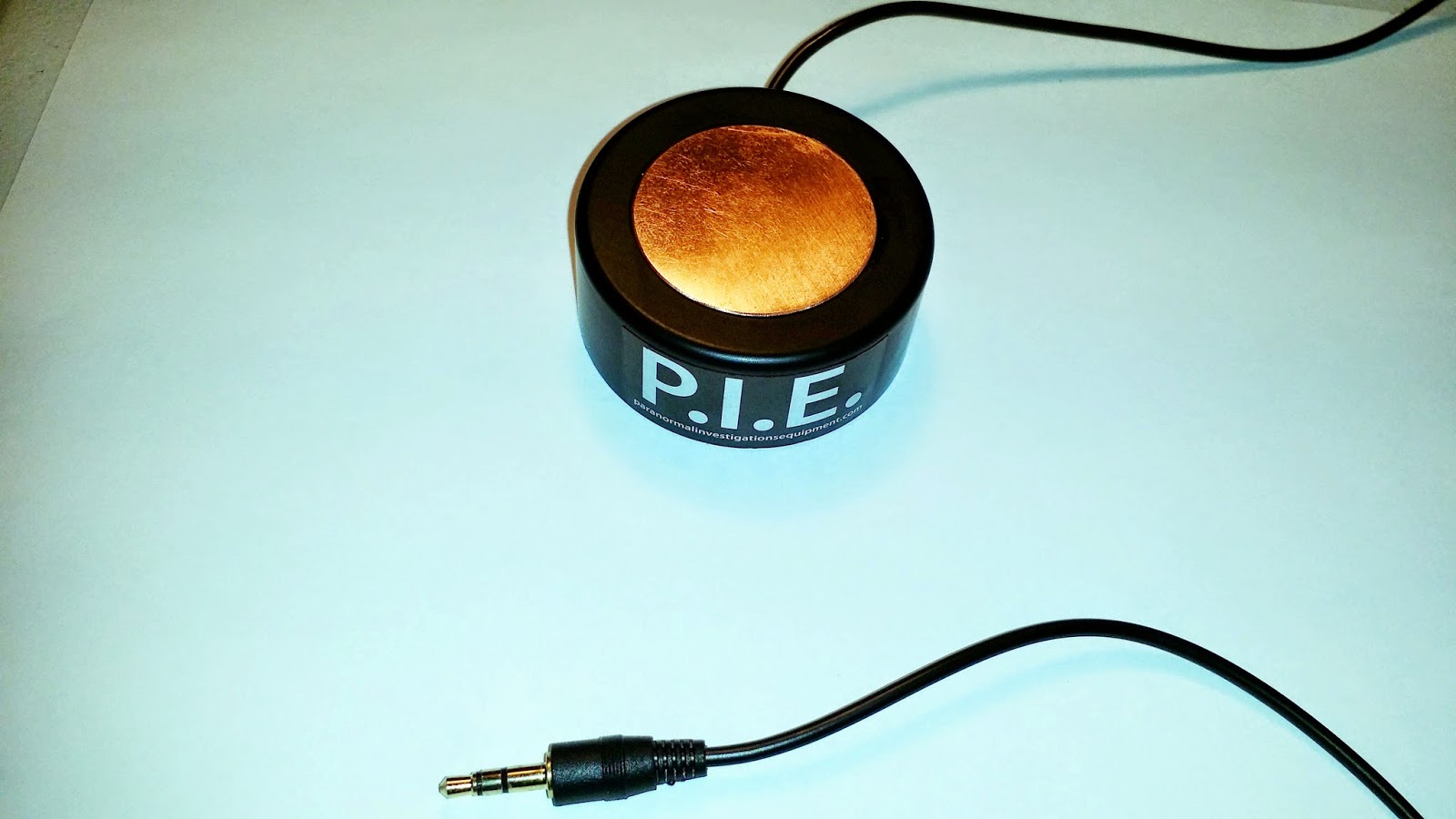
I just finished building my Raudive Diode, and with a few minor tweaks it is the same as the original Diode made by Konstantin Raudive a Latvian psychologist and philosopher. Below is a picture of the Raudive Diode I built. 
The Germanium Diode which is the major part of the Raudive Diode is essentially a non-physical microphone used in place of a physical microphone. The Germanium Diode acts as a microphone picking up only EVP's and not recording any ambient sounds (depending on the recorder used, when an external mic of any kind is plugged in, the recorder automatically shuts off the internal mic).


The copper disk mounted to the top is used as an antenna as its wired directly into the board containing the Germanium Diode. I believe copper is a better conductor rather than chrome or insulated wire. As you can see it plugs directly into the mic in or input socket on the recorder via a 3 foot cord. 

I use Zoom H2N recorders to plug these into during investigations, and let them sit constantly recording for the entire investigation. Also visit my online store for other paranormal investigating equipment.


Thursday, March 12, 2015

FULL SPECTRUM CAMERAS CAN DETECT VISABLE, NEAR INFRARED, AND NEAR ULTRAVIOLET LIGHT


These modified cameras are taking over the ghost hunting world because of there size and abilities. Either of the two cams come in regular or wifi versions, on the wifi versions the wifi can be turned on/off . There is also a 1.5" screen on the back of both versions that are great when using the cam as static or mobile to see what the cam is shooting. Both fit a wide assortment of accessories. Personally I use these for static cams as I don't like to carry a cam around with me, but I may in the future get a shoulder harness. A lot of teams (including the one I am affiliated with) have set there dvr's aside using these cameras strictly. These cams record both audio and video to an sd card and is easily review-able without having to download anything. Also there are no wires to run or having to tape wires down so they don't get tripped over making setup time much faster. If the wifi version is being used, there is a free app that can be downloaded to an Android phone, tablet or iPhone or tablet that lets one not only control the recording of the device but each wifi cam has its own ip address so there is an option to view up to 4 cams at a time.They do need a light source either ambient light, full spectrum light or IR light. Below is an adapter and filter that let the full spectrum modified camera act as an un-modified camera making the one camera act as two by just sliding on the adapter and screwing the filter to it.

With this filter adapter one can place the hot mirror filter or many other 37mm filters. The adapter can easily be slid off and on. The camera (both versions), the adapter and the hot mirror filter as well as many IR filters can be found and purchased by clicking this link and going to Paranormal Investigations Equipment. 


Here is a video I did of the filter working.

www.paranormalinvestigationsequipment.com